Truths That Set You Free
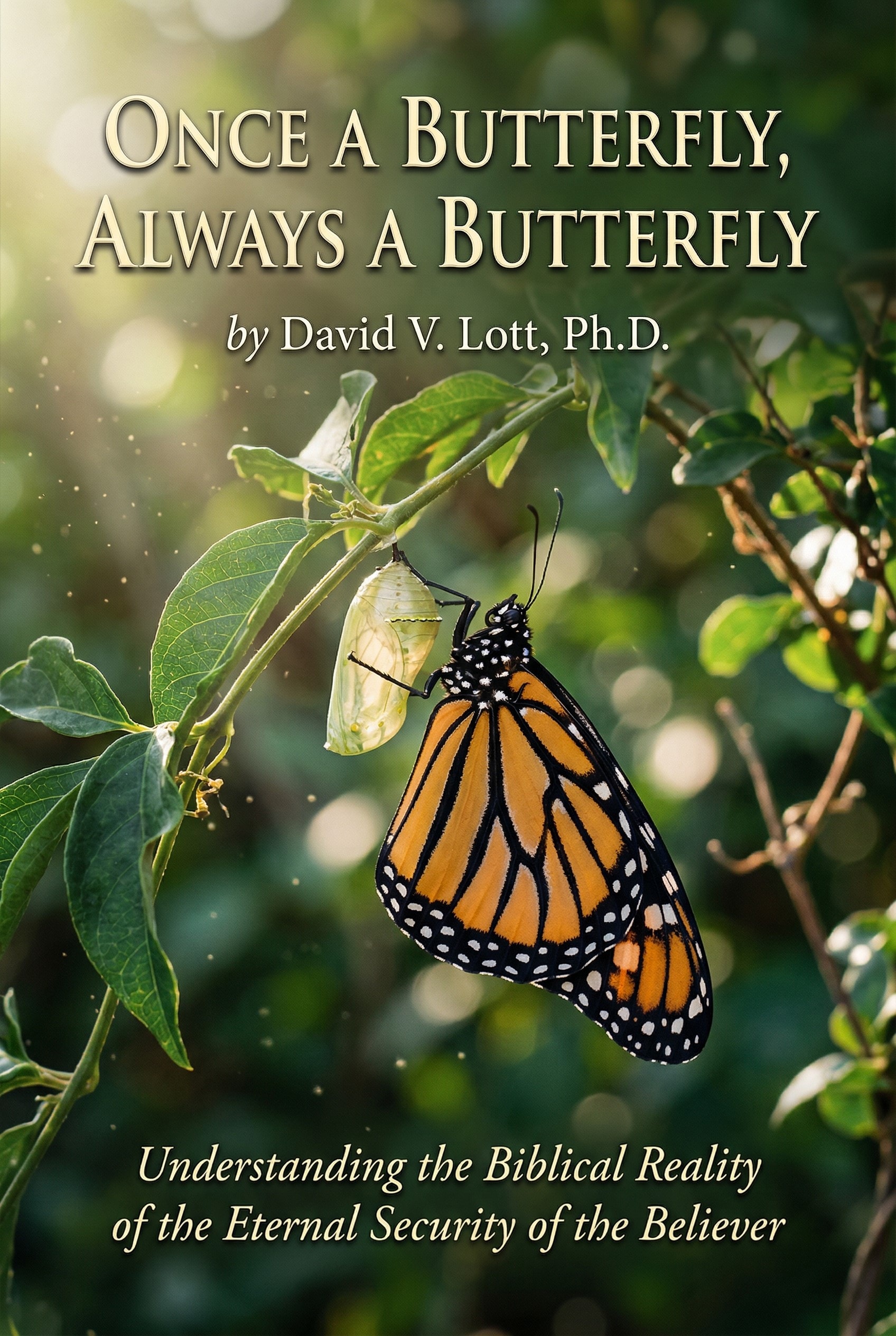
Once a Butterfly, Always a Butterfly
Understanding the Biblical Reality of the Eternal Security of the Believer
Salvation raises a question that eventually confronts nearly every serious Christian: If eternal life is truly the gift of God, can the believer ever lose what God has given?
Once a Butterfly, Always a Butterfly examines the biblical doctrine of eternal security by looking beyond the fears, failures, and changing experiences of the believer to the character and promises of God. The book asks whether salvation ultimately rests upon our ability to hold on to Christ—or upon Christ's ability to hold on to us.
The Central Question
Can Eternal Life Stop Being Eternal?
Christians sometimes speak of eternal life as though it were secure only so long as the believer continues to satisfy certain conditions. Salvation may be described as a gift, yet assurance can gradually become dependent upon perseverance, obedience, confession, spiritual maturity, or the absence of serious failure.
That creates an important theological question. If the life Christ gives can ultimately be forfeited, in what sense was it eternal when it was received?
Once a Butterfly, Always a Butterfly approaches eternal security from the nature of salvation itself. The believer has not merely adopted a new religious commitment or begun an improved way of living. Scripture describes something far more profound: new birth, justification, adoption, union with Christ, the indwelling Spirit, and the possession of eternal life.
The question, therefore, is not merely whether a Christian can fail. Christians can and do fail. The deeper question is whether human failure can reverse what God accomplished when He gave life to the one who believed in His Son.
Our assurance rests not in the strength of our grip upon Christ, but in the sufficiency of His work and the faithfulness of His promise.
The Central Metaphor
A New Creation, Not an Improved Caterpillar
The butterfly provides the central illustration of the book because transformation helps us understand what Scripture says has happened to the believer. A butterfly is not simply a caterpillar that has learned to fly. Something fundamental has occurred. Its former condition cannot adequately describe what it has become.
In the same way, the New Testament does not portray salvation merely as moral improvement. The person who believes in Christ is born again, made alive with Christ, declared righteous, placed into Christ, and identified with His death and resurrection. Paul can therefore describe the believer as a "new creature" for whom old things have passed away and new things have come (2 Corinthians 5:17).
This does not mean that Christians cease struggling with sin or suddenly become spiritually mature. It means that failure must now be understood in light of a new identity. The believer's conduct may be inconsistent with who he has become, but his failures do not return him to what he was before God gave him life in Christ.
The butterfly may not always fly well, but it does not become a caterpillar again.
Why Salvation Is Secure
Security Begins with God, Not with Us
The doctrine of eternal security becomes much clearer when salvation is viewed from God's side rather than exclusively from the believer's experience. The Father gives eternal life, the Son accomplishes redemption, and the Holy Spirit seals the believer. Salvation begins with divine action, rests upon divine promise, and is secured by the finished work of Jesus Christ.
Jesus did not promise temporary life to those who believe in Him. He said that the one who hears His word and believes the Father "has eternal life, and does not come into judgment, but has passed out of death into life" (John 5:24). Elsewhere He describes His sheep as recipients of eternal life who "shall never perish," adding that no one can snatch them from His hand or from the Father's hand (John 10:28–29).
These promises do not minimize obedience or discipleship. They establish the foundation from which Christian obedience grows. The believer does not obey in order to remain a child of God; he learns to live faithfully because God has already made him His child.
Grace and Discipleship
What Eternal Security Does Not Mean
Eternal security is sometimes criticized on the assumption that assurance gives Christians permission to live however they please. Yet that objection confuses the basis of salvation with the responsibilities of discipleship.
Scripture takes Christian conduct seriously. Sin can damage fellowship, destroy testimony, bring painful consequences, invite divine discipline, and result in the loss of opportunities and reward. Grace does not make obedience irrelevant. It places obedience where it belongs—not as the price by which eternal life is purchased or retained, but as the proper response of someone who has already received life in Christ.
This distinction allows Scripture's warnings to retain their seriousness without transforming salvation into a probationary arrangement. The Christian life matters profoundly precisely because the believer belongs permanently to Christ.
Questions the Book Addresses
- 01
What does Scripture mean when it calls salvation and eternal life a gift?
- 02
What actually happens to a person at the moment of faith in Christ?
- 03
Can sin, failure, doubt, or spiritual immaturity reverse the believer's new birth?
- 04
How should biblical warning passages be understood without allowing difficult texts to overturn clear promises?
- 05
What is the difference between eternal security, assurance, fellowship, discipleship, discipline, and reward?
- 06
How can Christians live responsibly under grace without turning obedience into another condition for remaining saved?
Key Biblical Texts
- John 3:16–18
- John 5:24
- John 6:37–40
- John 10:27–30
- Romans 8:31–39
- Ephesians 1:13–14
- Ephesians 2:8–10
- Philippians 1:6
- 2 Timothy 2:11–13
- 1 John 5:11–13
- Hebrews 7:25
- Hebrews 10:10–14
The security of the believer ultimately rests upon the faithfulness of the One who saves.
Once a Butterfly, Always a Butterfly invites believers to move their assurance away from the constantly changing measurement of their own spiritual performance and place it where Scripture places salvation itself—in Jesus Christ and His finished work.
Continue with a Free Teaching Study
The Believer's Identity in Christ
Salvation does more than change the believer's destination. It establishes an entirely new position and identity in Jesus Christ. Continue the study by examining the positional truths Scripture says belong to everyone who is in Christ.
Explore the Free Study→About the Book
Once a Butterfly, Always a Butterfly
Understanding the Biblical Reality of the Eternal Security of the Believer
David V. Lott, Ph.D.
Truths That Set You Free
Once a Butterfly, Always a Butterfly is a biblical examination of eternal security, assurance, and the permanence of the believer's new life in Christ. Rather than grounding assurance in the believer's ability to maintain an acceptable level of spiritual performance, the book examines salvation from the standpoint of God's promises, Christ's finished work, and the new identity given to those who believe.
Written for Christians who have struggled with the fear that failure might undo salvation, the book distinguishes carefully between salvation and discipleship, security and fellowship, grace and responsibility. Its central purpose is not to diminish the importance of Christian living, but to establish the secure foundation from which genuine Christian living can grow.