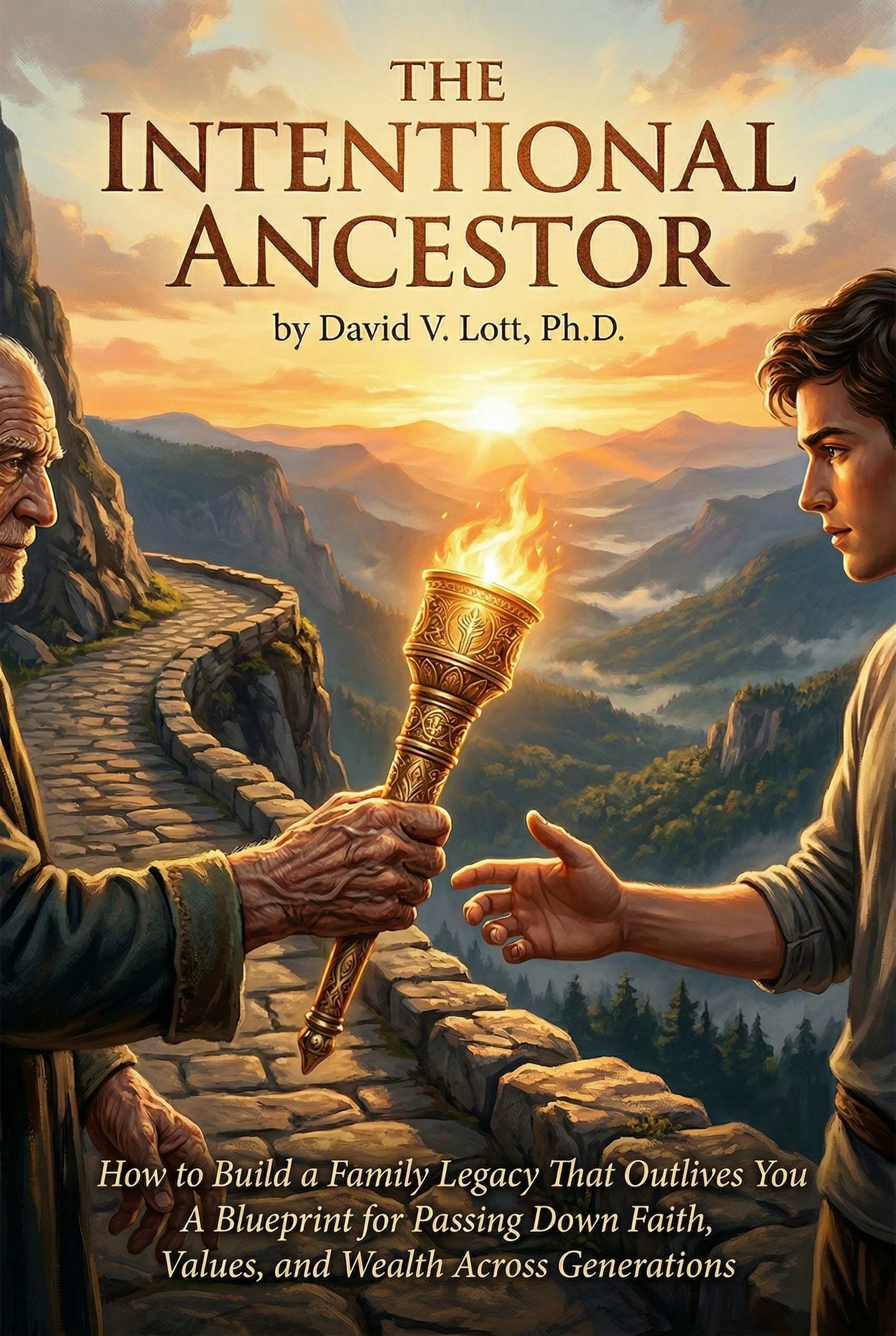
Faith • Values • Wealth • Generations
The Intentional Ancestor
How to Build a Family Legacy That Outlives You
A Blueprint for Passing Down Faith, Values, and Wealth Across Generations
We spend much of our lives thinking about the people who came before us. We inherit their names, stories, traditions, sacrifices, opportunities, mistakes, values, and sometimes their possessions. Yet there comes a point when we must recognize that we are no longer merely someone's descendant. We are becoming someone else's ancestor.
The Intentional Ancestor begins with that change in perspective. It asks what we are building today that may still matter to children, grandchildren, and generations we may never personally know. Financial resources are part of that conversation, but a lasting legacy encompasses far more: faith, character, wisdom, family identity, generosity, relationships, stories, and the values by which future generations will understand what they have received.
The objective is not to control the future. It is to live deliberately enough that those who follow us inherit more than whatever happens to remain.
A Different Perspective
What Will People Who Never Knew You Receive Because You Lived?
The word ancestor usually causes us to look backward. We think of grandparents and great-grandparents, old photographs, family stories, places from which our families came, and people whose decisions helped create the circumstances into which we were born.
Yet ancestry also points forward. If we have children and grandchildren, or influence generations that follow us in other meaningful ways, we are already participating in a story whose later chapters we will never read. Decisions being made today may affect people who have not yet been born.
That realization changes the meaning of legacy. Instead of asking only what we received from those who preceded us, we begin asking what we are intentionally preparing for those who will follow.
We cannot choose whether we will influence the generations that follow us. We can choose whether that influence will be intentional.
What Actually Survives Us
An Estate Transfers Possessions. A Legacy Transfers Much More.
Financial planning is an important part of responsible stewardship. Property, investments, businesses, savings, and other assets should be handled thoughtfully, and families benefit from preparing carefully for their eventual transfer.
But the things most capable of shaping future generations cannot be contained entirely within a will or trust. Families also transmit beliefs about God, attitudes toward money, patterns of marriage and parenting, expectations concerning work, habits of generosity, ways of responding to adversity, family stories, and assumptions about what constitutes a meaningful life.
Some of these things are deliberately taught. Others are transmitted simply because succeeding generations observe them. Intentional ancestry begins by recognizing both forms of influence and deciding that the most important parts of a family's legacy should not be left entirely to accident.
Inheritance
What we leave to the next generation.
Legacy
What we build into the next generation.
A wise ancestor prepares both.
The First Legacy
One Generation Declares His Works to Another
Scripture repeatedly portrays faith as something one generation has a responsibility to place before the next. Israel was commanded to teach God's words diligently within the ordinary rhythms of family life. The Psalms speak of declaring His works from generation to generation. Paul later remembers the sincere faith that lived first in Timothy's grandmother Lois and his mother Eunice.
None of these passages suggests that saving faith can simply be inherited biologically. Every generation must respond personally to God. What previous generations can provide is a faithful witness: truth taught clearly, faith lived visibly, God's faithfulness remembered, questions welcomed, and a family history in which spiritual realities are not treated as subjects reserved only for Sunday.
The intentional ancestor therefore does not attempt to manufacture the faith of descendants. He or she accepts the responsibility to make sure that future generations have been given a clear testimony concerning the God in whom the family placed its trust.
We cannot believe for the generations that follow us, but we can make certain they know what we believed and why.
From Words to Practice
Future Generations Will Remember What We Lived More Clearly Than What We Claimed
Families often speak about their values, but values become durable only when they are visible in actual decisions. Children learn what their families truly value by observing how time is spent, how money is used, how people are treated, how promises are kept, how conflict is resolved, and how the family responds when doing what is right becomes costly.
This makes legacy deeply practical. Honesty, generosity, perseverance, humility, responsibility, faithfulness, and service cannot be transmitted merely by placing them on a family mission statement. They must become recognizable patterns within family life.
Intentional ancestry therefore begins with alignment. If we want future generations to value something, the first question is whether they can see that value operating in us.
Remembering
Tell Them How the Family Arrived Here
Every family possesses stories that explain things its descendants might otherwise misunderstand. There were risks taken, opportunities recognized, mistakes made, hardships endured, prayers answered, sacrifices accepted, relationships repaired, and moments when circumstances changed unexpectedly.
If those stories disappear, descendants may inherit the outcome without understanding the journey. They may receive resources without knowing what was required to create them, enjoy opportunities without understanding the sacrifices that made them possible, or inherit traditions whose original meaning has been forgotten.
Preserving family stories is therefore not simply nostalgia. Stories give later generations context. They explain why certain values matter, where particular traditions originated, what earlier generations learned through failure, and how faith operated when the outcome was uncertain.
Do not leave future generations only the results of your life. Leave them enough of the story to understand how those results came to be.
Stewardship Across Generations
What Is the Money For?
Families can become so focused upon accumulating and preserving wealth that they never clearly articulate its purpose. Yet wealth without purpose can easily become consumption in one generation and entitlement in the next.
Biblical stewardship begins with a different premise. Resources are entrusted before they are owned absolutely. They provide opportunities to care for family, create productive enterprises, respond to need, practice generosity, support ministry, educate succeeding generations, and accomplish purposes larger than personal consumption.
Intentional ancestors therefore ask more than how much they hope to leave. They consider what they hope those resources will accomplish and whether future generations are being prepared to understand the responsibility that accompanies them.
The Human Side of Legacy
A Carefully Planned Inheritance Can Still Be Placed Into Unprepared Hands
Estate planning can determine how and when assets transfer, but documents cannot create judgment, gratitude, discipline, competence, or character. Those qualities must be developed in people long before ownership changes.
This means younger generations need opportunities to participate in responsibility while older generations are still present to provide guidance. Financial literacy can be taught. Decisions can be discussed. Younger family members can participate in generosity, observe stewardship, manage increasingly meaningful resources, and learn that responsibility accompanies privilege.
The objective is not to predetermine every choice descendants will make. It is to prepare them well enough that when greater responsibility eventually arrives, it is not their first encounter with it.
The most valuable preparation for inheritance may occur years before anything is inherited.
Influence Across Generations
Grandparenthood Creates a Different Kind of Opportunity
Grandparents occupy a distinctive place within a family's generational story. They are close enough to participate personally in the lives of grandchildren while also carrying memories, experiences, and perspectives that connect those grandchildren with an earlier generation.
Their role is not to replace parents or compete with parental authority. Healthy grandparental influence strengthens the family by respecting the parents' primary responsibility while providing encouragement, continuity, prayer, stories, wisdom, and time.
For many people, grandparenthood also arrives at a stage of life when accumulated experience can be viewed differently. Lessons that once seemed relevant only to a career, business, marriage, financial decision, or season of adversity can now be recognized as wisdom worth preserving for someone else.
Intentional ancestry asks how that accumulated wisdom can be made available without becoming controlling or intrusive.
Relationships Are Part of the Inheritance
What Good Is Preserving the Estate If the Family Is Destroyed in the Process?
Generational wealth and family unity do not automatically reinforce one another. Inheritance can expose old rivalries, unclear expectations, perceptions of favoritism, different attitudes toward money, and disagreements about family property or business interests.
Families cannot eliminate every future conflict, but they can reduce unnecessary ambiguity. Communication before a transition is usually healthier than explanation after one. Decisions can be discussed, purposes clarified, expectations addressed, and family members given opportunities to ask questions while those responsible for the decisions are still present.
Intentional ancestry therefore treats relationships themselves as part of the legacy. A family that preserves financial assets while permanently damaging the relationships among those who receive them has preserved only part of what mattered.
A Legacy Large Enough to Serve Others
The Purpose of Blessing Is Larger Than Preservation
A family legacy can become too inward-looking if its only objective is to preserve resources indefinitely for descendants. Scripture presents stewardship within a wider horizon that includes generosity, service, compassion, hospitality, ministry, and concern for those beyond one's immediate household.
Intentional families can allow younger generations to participate in these decisions. Children and grandchildren can learn not merely that the family gives, but why it gives. They can observe that resources carry responsibilities and that financial capacity creates opportunities to serve people and purposes beyond ourselves.
In this way, generosity itself becomes part of the inheritance. Future generations receive not simply assets, but a model for what those assets are capable of accomplishing.
A Longer Horizon
Some of the Most Important Results of Your Life May Occur After You Are Gone
Modern life encourages short planning horizons. We think about the next bill, the next year, the next career move, retirement, or perhaps the estate our children will eventually receive. Intentional ancestry stretches the horizon farther.
What values might grandchildren teach their own children because they first saw them demonstrated in us? What family stories might still be told decades from now? What generosity might continue because we taught descendants to regard resources as stewardship? What opportunities might exist because capital was preserved rather than consumed? What spiritual influence might reach someone whose birth we will never live to see?
We cannot control those outcomes, nor can we guarantee the decisions of future generations. But we can make choices today that give faithfulness a longer reach.
Legacy is the decision to invest part of today's life in a future we will not personally inhabit.
From Idea to Practice
A Legacy Needs More Than Good Intentions
Most people want to leave something meaningful behind. The difficulty is that legacy can remain an aspiration rather than becoming a practice. We assume there will eventually be time to record the stories, explain the financial decisions, organize important documents, discuss family values, teach younger generations, establish traditions, or communicate the lessons experience has taught us.
Intentional ancestry brings those activities into the present. It asks what can be done now rather than what we hope someone will somehow understand later.
Identify
Determine what is worth carrying forward.
Live
Make those values visible in present life.
Teach
Explain the principles behind the family's decisions.
Record
Preserve stories, experiences, and accumulated wisdom.
Involve
Give younger generations meaningful opportunities to participate.
Release
Prepare succeeding generations eventually to carry responsibility themselves.
None of these steps guarantees what future generations will do. They simply make it less likely that the things we regard as most important will disappear because we never took the time to communicate them.
Questions the Book Explores
What Kind of Ancestor Are You Becoming?
- 01
What do I hope future generations will know about God because of the way I lived and what I taught?
- 02
Which family values are important enough that they should be intentionally explained rather than merely assumed?
- 03
What stories from our family history should be preserved before the people who know them are gone?
- 04
What have experience, success, failure, hardship, and opportunity taught me that could benefit someone two generations from now?
- 05
What purpose should the financial resources accumulated by our family ultimately serve?
- 06
Are succeeding generations being prepared to steward responsibility, or merely positioned eventually to receive assets?
- 07
How can generosity and service become part of our family's identity across generations?
- 08
What should I begin doing now if I want my influence to extend beyond my lifetime?
The Biblical Foundation
Faithfulness From Generation to Generation
Remember & Teach
- Deuteronomy 4:9
- Deuteronomy 6:4–9
- Joshua 4:19–24
- Psalm 78:1–8
Generational Wisdom
- Psalm 145:4
- Proverbs 13:22
- Proverbs 20:7
- Joel 1:3
Faith & Stewardship
- Matthew 6:19–21
- 1 Timothy 6:17–19
- 2 Timothy 1:3–5
- 2 Timothy 3:14–15
The Essence of the Book
"You are not merely the product of generations that came before you. You are already becoming an ancestor to generations that will follow."
— The Intentional Ancestor
The question is therefore not simply what we will leave behind, but what we are building forward. Faith can be taught, wisdom can be preserved, values can be demonstrated, stories can be recorded, resources can be stewarded, generosity can be modeled, and succeeding generations can be prepared for responsibility. We cannot control what they ultimately choose to do with those things, but we can make certain that our own generation does not fail to place them within reach.
Continue Exploring
From Financial Capacity to an Enduring Family Legacy
The Intentional Ancestor completes a broader conversation developed across four books. Each approaches the family from a different point in the generational journey, moving from the practical management of resources to the larger question of what one generation intentionally places into the hands and hearts of another.
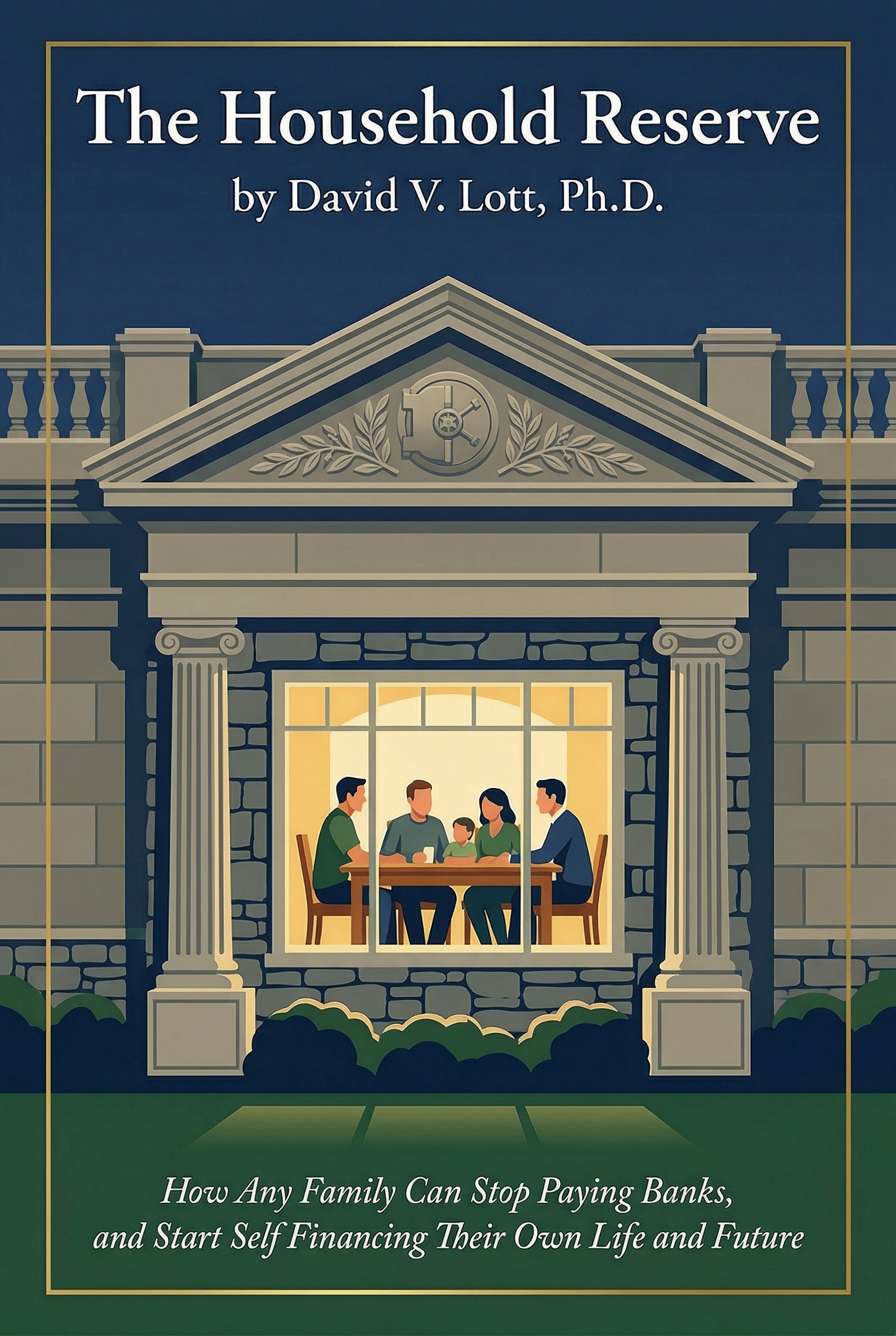
The Household Reserve
Build greater financial capacity within the household by organizing cash flow, establishing reserves, protecting long-term growth, and developing family capital.
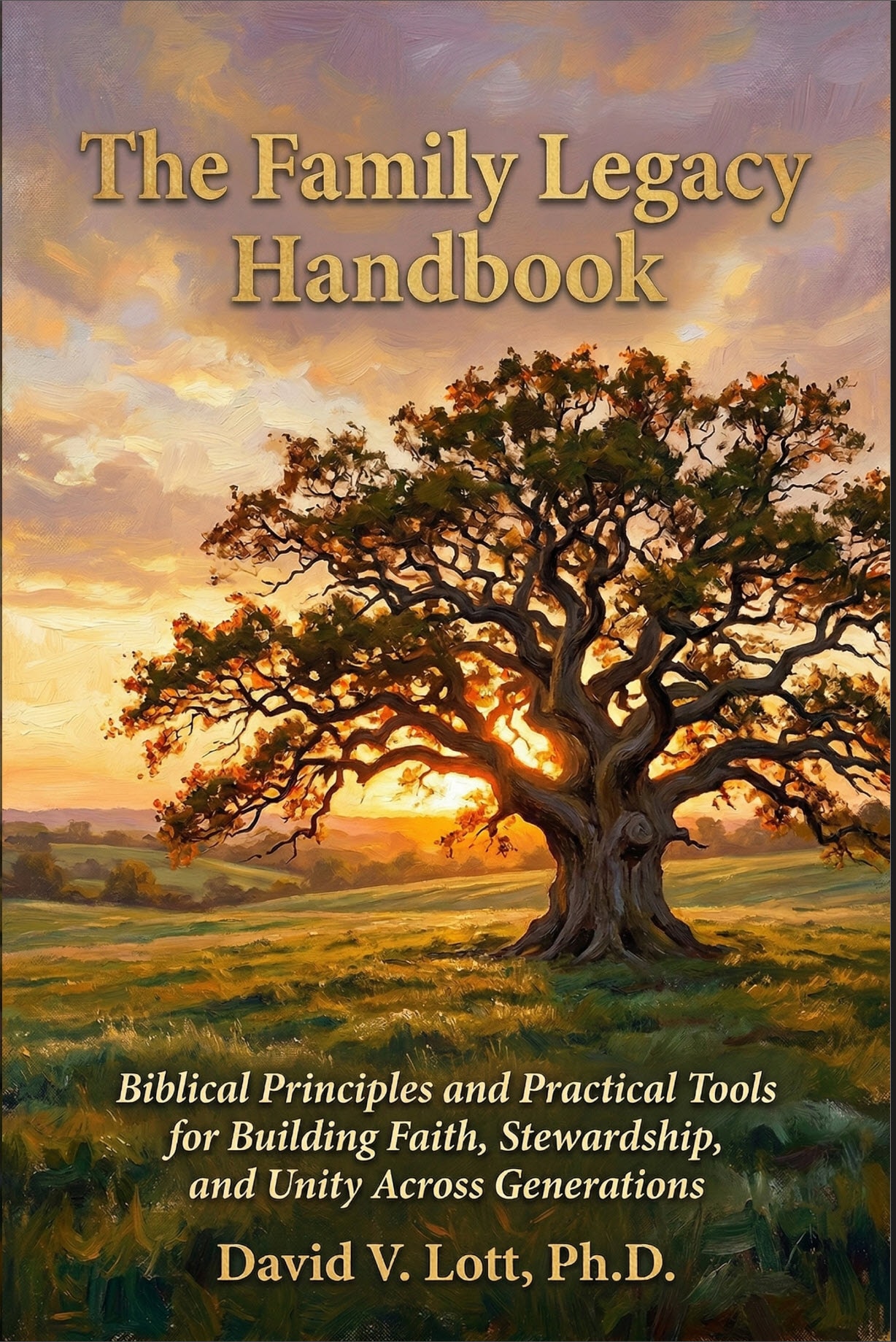
The Family Legacy Handbook
Identify and intentionally cultivate the faith, wisdom, stewardship, relationships, stories, generosity, and values the family hopes to carry forward.
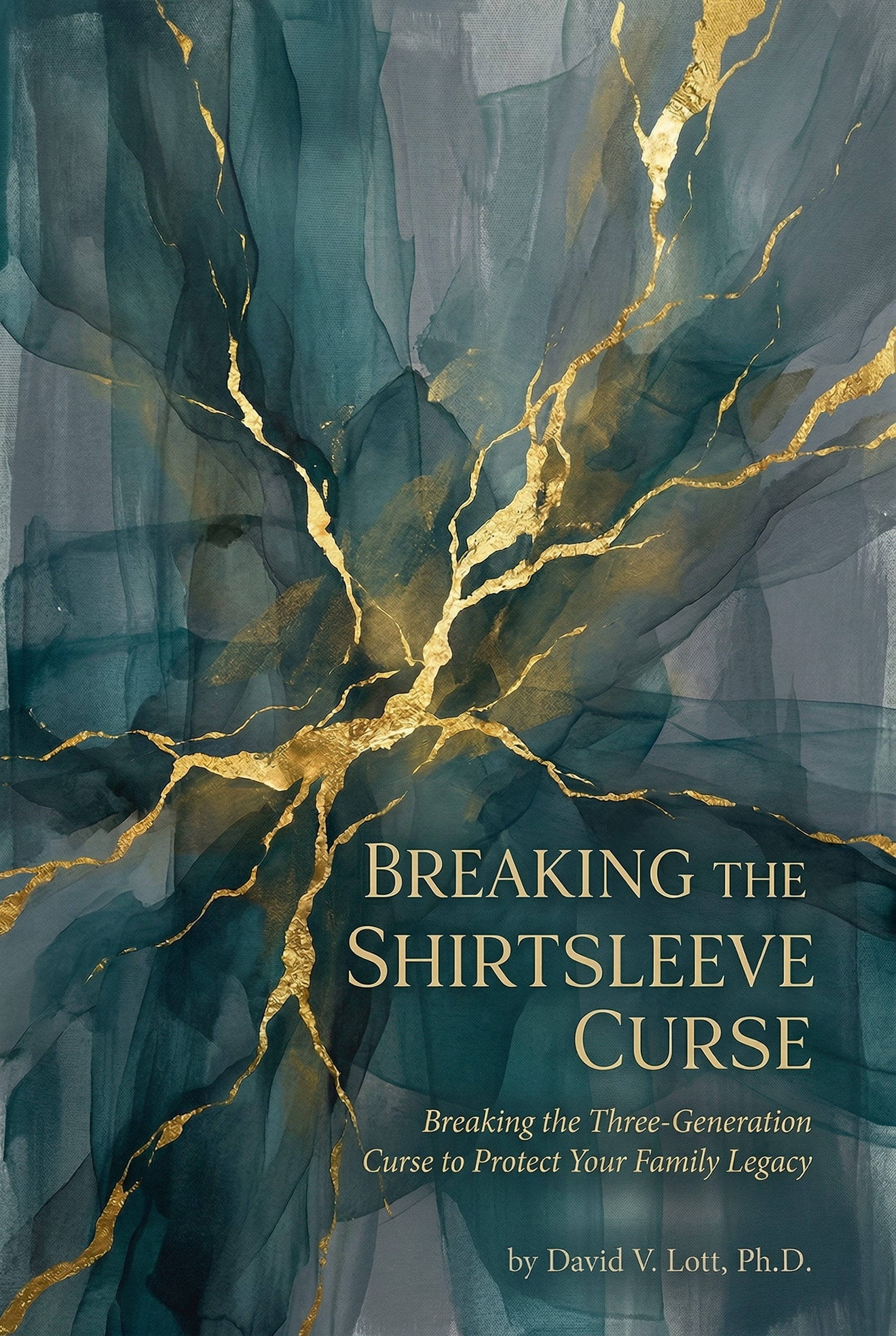
Breaking the Shirtsleeve Curse
Prepare succeeding generations for responsibility so that wealth, leadership, and opportunity can be transferred without undermining either character or family relationships.
The Intentional Ancestor
Bring the entire generational perspective together by asking how the life being lived today can intentionally influence people and generations that extend beyond our own lifetime.
The Long View
Build Something That Can Continue Without You
The deepest measure of legacy is not whether future generations reproduce our lives exactly. They should not. Each generation will face different circumstances, opportunities, technologies, challenges, and responsibilities.
A successful legacy instead gives those generations something durable from which to begin: a knowledge of where they came from, an understanding of the faith and values that shaped the family, wisdom accumulated through earlier experience, examples of stewardship and generosity, relationships worth preserving, and resources accompanied by a sense of responsibility.
The intentional ancestor accepts an important limitation: we prepare the future without possessing it. Eventually the resources, responsibilities, stories, and opportunities must pass into someone else's hands.
Our task is to make that handoff as thoughtful as the life that preceded it.
About the Book
The Intentional Ancestor
How to Build a Family Legacy That Outlives You
A Blueprint for Passing Down Faith, Values, and Wealth Across Generations
David V. Lott, Ph.D.
The Intentional Ancestor invites readers to view legacy from an unfamiliar direction: not simply by looking backward at the people from whom they descended, but by looking forward toward the generations for whom they themselves are becoming ancestors. Bringing together faith, family values, stewardship, wealth, generosity, accumulated wisdom, family stories, and preparation for responsibility, the book provides a framework for thinking intentionally about what should survive us. Its purpose is not to control future generations, but to help the present generation live deliberately enough that those who follow receive more than possessions—they receive a foundation upon which they can continue building.
View The Intentional Ancestor on Amazon→