Biblical & Theological Studies
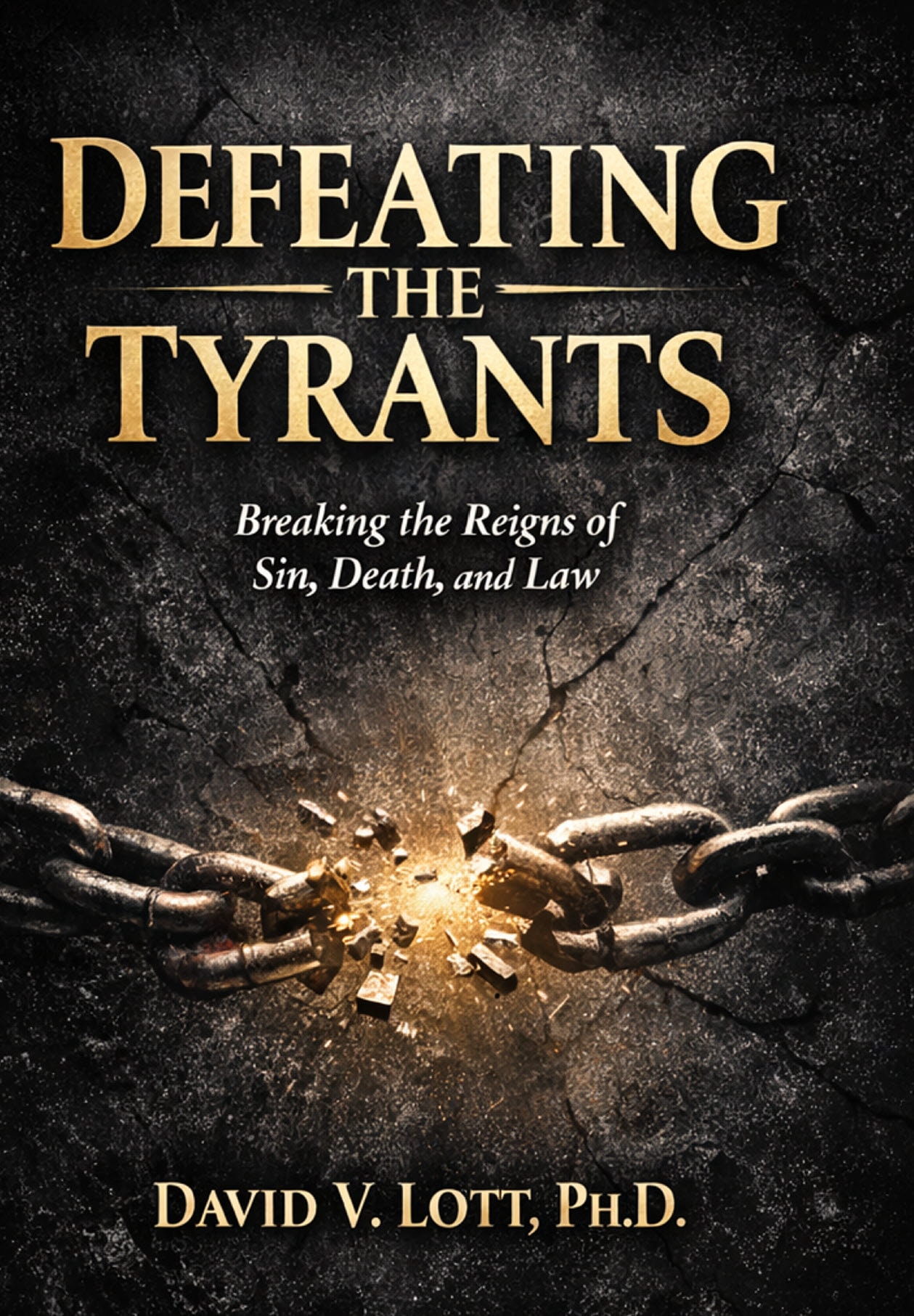
Defeating the Tyrants
Breaking the Reigns of Sin, Death, and Law
Paul describes the human predicament in Romans with language far stronger than the language of bad habits, poor choices, or moral weakness. Sin reigns. Death reigns. Law exercises authority. Together they appear in Paul's argument almost as tyrannical powers under whose dominion humanity has been held.
Defeating the Tyrants follows Paul's argument to discover how these powers gained their dominion, why human effort cannot defeat them, and how the death and resurrection of Jesus Christ fundamentally changed the believer's relationship to each of them. The Christian's victory does not begin with trying harder to overcome the tyrants. It begins by understanding what God has already accomplished through union with Christ.
The Human Predicament
When Sin Becomes a King
We ordinarily think about sin as something people do. Paul certainly recognizes individual acts of sin, but in Romans he develops a more formidable picture. Sin enters the world, establishes dominion, deceives, enslaves, and ultimately pays its subjects the wage of Death. Paul can therefore speak of Sin as reigning “in your mortal body” and warn believers not to present themselves to Sin as instruments of unrighteousness (Romans 6:12–13).
This personification matters because it changes the nature of the problem. Humanity does not simply need better rules or stronger resolve. A person held under a tyrant requires liberation.
Paul then introduces a remarkable gospel claim. Through identification with the death of Christ, the believer’s former relationship to Sin’s authority has been broken. The Christian is therefore told to reckon himself “dead to Sin, but alive to God in Christ Jesus” (Romans 6:11).
Paul does not tell believers to defeat Sin so that they can become free. He tells people who have been set free to stop living as though the old tyrant still possesses them.
Freedom begins by understanding that Sin no longer has the right to reign.
The Reign of Death
The King Behind the Fear
Behind the reign of Sin stands another power whose presence reaches back to Adam. Paul writes that through one man Sin entered the world, “and Death through Sin,” until Death spread to all humanity (Romans 5:12). Later he becomes even more explicit: “Death reigned” (Romans 5:14, 17).
Death is therefore more than the final biological event at the end of human life. Within Paul’s argument it represents an invading power that entered God’s creation through Sin and established a reign from which humanity could not deliver itself.
The gospel confronts that reign through the resurrection of Jesus Christ. The One who entered Death emerged victorious over it, and those who belong to Him now share in His life. Physical death remains a present reality, but it no longer possesses the final word over the believer. Paul can therefore look toward the resurrection and declare that the last enemy to be abolished is Death (1 Corinthians 15:26).
Christian Hope is not ultimately the promise that believers will avoid Death. It is the promise that because Christ lives, Death cannot keep those who belong to Him.
The Problem of Law
When Something Good Cannot Give Life
The third member of the triad is the most surprising because Law is fundamentally different from Sin and Death. Paul insists that the Law is “holy, and the commandment is holy and righteous and good” (Romans 7:12). The problem is not that God’s Law is evil. The problem is what happens when holy Law encounters fallen humanity under the power of Sin.
Law can identify Sin, expose transgression, and pronounce the standard of righteousness, but it cannot impart the life necessary to produce what it commands. Sin exploits the commandment, turning something good into an occasion for condemnation and death.
This explains the frustration at the heart of Romans 7. The answer to humanity’s predicament cannot simply be more commandment, greater determination, or intensified religious effort. What is needed is liberation from the jurisdiction under which condemnation operates and the gift of a new kind of life.
Paul announces precisely that transition: believers have “died to the Law through the body of Christ” so that they might belong to Another—to the One raised from the dead—and “bear fruit for God” (Romans 7:4).
The Law can reveal righteousness. Only Christ can give life.
Union with Christ
The Victory We Could Never Accomplish
Paul’s answer to Sin, Death, and Law is not a technique for self-improvement. Again and again his argument returns to the believer’s identification with Jesus Christ.
Christ died, and those who belong to Him are identified with His death. Christ was raised, and believers now share His resurrection life. The significance of this union reaches into every part of the tyrants’ former dominion. The believer has died to Sin’s mastery, died to the jurisdiction of Law as the means of producing righteousness, and received a life over which Death can never exercise ultimate authority.
This is why Romans 6 does not begin with instructions about how Christians should behave. Paul first reminds them of what has already happened to them. Christian conduct follows Christian identity. Imperative follows indicative. The believer learns to live differently because his relationship to the old powers has already changed.
The Christian life therefore becomes less an attempt to achieve victory and more a process of learning to live consistently with a victory Christ has already secured.
Three Reigns — One Deliverer
Sin. Death. Law.
Sin
Sin seeks mastery, enslaves, deceives, and produces death. In Christ, the believer has died to Sin’s former dominion and is now called to present himself to God as one alive from the dead.
Death
Death entered through Sin and established its reign over humanity. Through Christ’s resurrection, its ultimate authority has been broken, and its final destruction is assured.
Law
Law reveals God’s righteous standard but cannot impart the life necessary to fulfill it. Through Christ, the believer has died to Law’s jurisdiction and now serves in the newness of the Spirit.
Sin no longer owns us. Death cannot keep us. Law cannot condemn those who are in Christ Jesus.
The Movement of the Argument
From Reign to Freedom
One of the strengths of reading Romans 5–8 as a sustained argument is that Paul’s thought begins to emerge as a deliberate movement rather than a collection of disconnected theological statements.
Romans 5 introduces the reigns of Sin and Death and contrasts Adam’s legacy with the abundance of grace and the gift of righteousness found in Christ. Romans 6 explains the believer’s changed relationship to Sin through identification with Christ’s death and resurrection. Romans 7 addresses Law, Sin, and the inability of human effort to produce the righteousness Law demands. Romans 8 then opens with the announcement toward which the argument has been moving: “There is therefore now no condemnation for those who are in Christ Jesus.”
The journey is from Adam to Christ, from condemnation to justification, from slavery to freedom, from Death to life, and from the inability of the flesh to the life-giving work of the Spirit.
The tyrants have not simply been weakened. In Christ, their claim upon the believer has fundamentally changed.
Questions the Book Addresses
- 01
Why does Paul speak about Sin and Death as though they were ruling powers rather than merely actions and consequences?
- 02
What does it mean for the believer to have died to Sin while still experiencing temptation and failure?
- 03
How did Death enter humanity’s experience, and what did the resurrection of Christ accomplish concerning its reign?
- 04
Why does Paul connect Law with Sin and Death if the Law itself is holy, righteous, and good?
- 05
What does union with Christ mean for the believer’s relationship to each of these powers?
- 06
How does understanding Romans 5–8 change the way Christians approach temptation, condemnation, obedience, and the struggle of everyday Christian living?
Key Biblical Texts
- Romans 5:12–21
- Romans 6:1–11
- Romans 6:12–14
- Romans 6:15–23
- Romans 7:1–6
- Romans 7:7–13
- Romans 7:14–25
- Romans 8:1–4
- Romans 8:9–17
- 1 Corinthians 15:20–28
- 1 Corinthians 15:54–57
- Colossians 2:13–15
The Christian does not fight for liberation from the tyrants as though Christ has not yet acted. He learns to live from the liberation Christ has already accomplished.
Defeating the Tyrants invites the reader to follow Paul’s argument through the reigns of Sin, Death, and Law and discover why the believer’s freedom rests not upon the strength of human determination but upon participation in the death and resurrection of Jesus Christ.
Continue with a Free Teaching Study
The Battlefield of Belief
Christ has broken the believer’s former relationship to Sin’s dominion, but the Christian still encounters temptation, deception, and accusation. The free Battlefield of Belief teaching study examines how those attacks operate and how the believer learns to respond from the truth of what God has already accomplished in Christ.
Explore the Free Study→About the Book
Defeating the Tyrants
Breaking the Reigns of Sin, Death, and Law
David V. Lott, Ph.D.
Defeating the Tyrants examines Paul’s portrayal of Sin, Death, and Law within the argument of Romans, paying particular attention to the way these realities function almost as ruling powers within humanity’s fallen condition. Following the movement from Romans 5 through Romans 8, the book explores how Adam’s legacy brought humanity under domination and how the death and resurrection of Jesus Christ establish an entirely new reality for those who belong to Him.
Rather than presenting Christian victory as the product of greater determination or religious effort, the book directs attention to union with Christ. The believer’s relationship to the tyrants has changed because he has been identified with Christ in His death and resurrection. Christian growth therefore begins with learning to understand, believe, and increasingly live from what God has already declared to be true.